400 128 6709

行业新闻
 发布时间:2025-08-01
 点击次数:
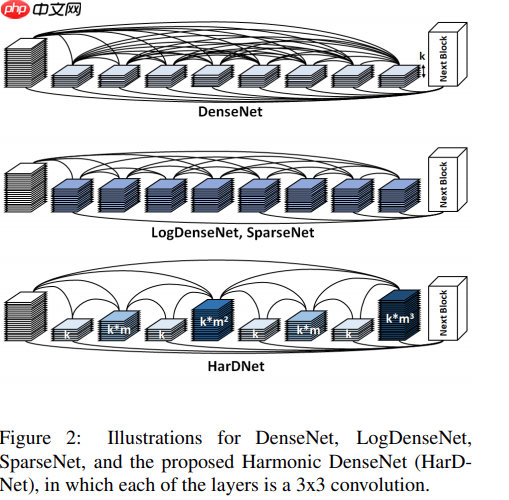
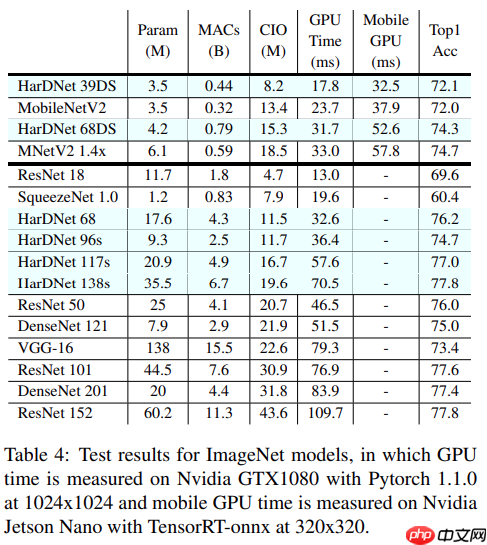
点击次数: 本文介绍HarDNet模型,其通过设计CNN减少特征图DRAM内存交互,以CIO为衡量指标,优化计算量与显存交换,提升推理时间30%~40%。文中含Pytorch代码与论文地址,还涉及ImageNet数据集,展示了模型在Paddle框架下的搭建、精度对齐、训练及验证过程,验证精度达0.7605。
☞☞☞AI 智能聊天, 问答助手, AI 智能搜索, 免费无限量使用 DeepSeek R1 模型☜☜☜

HarDNet: A Low Memory Traffic Network
github pytorch代码: https://github.com/PingoLH/Pytorch-HarDNet
论文地址: https://arxiv.org/pdf/1909.00948.pdf
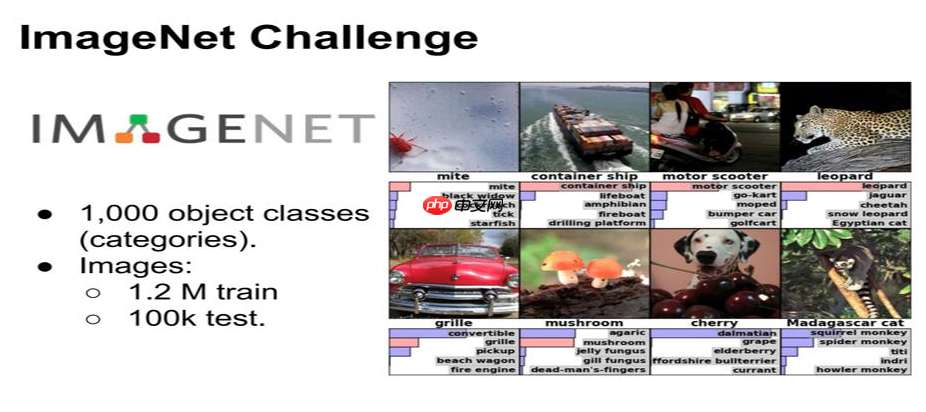
ImageNet图像数据集始于2009年,当时李飞飞教授等在CVPR2009上发表了一篇名为《ImageNet: A Large-Scale Hierarchical Image Database》的论文,之后就是基于ImageNet数据集的7届ImageNet挑战赛(2010年开始),2017年后,ImageNet由Kaggle(Kaggle公司是由联合创始人兼首席执行官Anthony Goldbloom 2010年在墨尔本创立的,主要是为开发商和数据科学家提供举办机器学习竞赛、托管数据库、编写和分享代码的平台)继续维护。
本AIStudio项目在线下进行的训练, 所以只使用了验证集进行验证
#数据集解压!mkdir ~/data/ILSVRC2012
!tar -xf ~/data/data68594/ILSVRC2012_img_val.tar -C ~/data/ILSVRC2012
In [1]
#加载数据集import osimport shutilimport numpy as npimport paddlefrom paddle.io import Datasetfrom paddle.vision.datasets import DatasetFolder, ImageFolder# from paddle.vision.transforms import Compose, Resize, Transpose, Normalizeimport paddle.vision.transforms as T
train_parameters = {    'train_image_dir': '/home/aistudio/data/ILSVRC2012',    'eval_image_dir': '/home/aistudio/data/ILSVRC2012',    'test_image_dir': '/home/aistudio/data/ILSVRC2012',
}class CatDataset(Dataset):
    def __init__(self, mode='train'):
        super(CatDataset, self).__init__()
        train_image_dir = train_parameters['train_image_dir']
        eval_image_dir = train_parameters['eval_image_dir']
        test_image_dir = train_parameters['test_image_dir']

        data_transforms = T.Compose([
            T.Resize(256, interpolation='bicubic'),
            T.CenterCrop(224),
            T.ToTensor(),
            T.Normalize(mean=[0.485, 0.456, 0.406], std=[0.229, 0.224, 0.225])
        ])

        train_data_folder = DatasetFolder(train_image_dir, transform=data_transforms)
        eval_data_folder = DatasetFolder(eval_image_dir, transform=data_transforms)
        test_data_folder = ImageFolder(test_image_dir, transform=data_transforms)
        self.mode = mode        if self.mode  == 'train':
            self.data = train_data_folder        elif self.mode  == 'eval':
            self.data = eval_data_folder        elif self.mode  == 'test':
            self.data = test_data_folder        print(mode, len(self.data))    def __getitem__(self, index):
        data = self.data[index][0].astype('float32')        if self.mode  == 'test':            return data        else:
            label = np.array([self.data[index][1]]).astype('int64')            return data, label    def __len__(self):
        return len(self.data)
/opt/conda/envs/python35-paddle120-env/lib/python3.7/site-packages/paddle/fluid/layers/utils.py:26: DeprecationWarning: `np.int` is a deprecated alias for the builtin `int`. To silence this warning, use `int` by itself. Doing this will not modify any beh*ior and is safe. When replacing `np.int`, you may wish to use e.g. `np.int64` or `np.int32` to specify the precision. If you wish to review your current use, check the release note link for additional information.
Deprecated in NumPy 1.20; for more details and guidance: https://numpy.org/devdocs/release/1.20.0-notes.html#deprecations
  def convert_to_list(value, n, name, dtype=np.int):
#构建hardet68网络import paddleimport paddle.nn as nnfrom math import ceilfrom paddle.vision.models import resnet50import pickleimport numpy as npclass ConvBNLayer(nn.Layer):
    def __init__(self, in_channels, channels, kernel=3, stride=1, pad=0, num_group=1, bias=False, act="relu6"):
        super(ConvBNLayer, self).__init__()

        conv_ = None
        if stride == 2:
            conv_ = nn.Conv2D(in_channels, channels, kernel, stride, [1, 0, 1, 0], groups=num_group, bias_attr=bias)        else:
            conv_ = nn.Conv2D(in_channels, channels, kernel, stride, kernel//2, groups=num_group, bias_attr=bias)

        bn_ = nn.BatchNorm2D(channels)
        act_ = None
        if act == 'swish':
            act_ = nn.Swish()        elif act == 'relu':
            act_ = nn.ReLU()        elif act == 'relu6':
            act_ = nn.ReLU6()

        self.conv_bn = nn.Sequential(
                            conv_,
                            bn_
                        )        if act_ is not None:
            self.conv_bn = nn.Sequential(
                                conv_,
                                bn_,
                                act_
                            )    def forward(self, inputs):
        return self.conv_bn(inputs)class HarDBlock(nn.Layer):

    #获取层连接
    def get_link(self, layer, base_ch, growth_rate, grmul):
        #检查层
        if layer == 0:            return base_ch, 0, []
        #计算输出的通道数
        out_channels = growth_rate
        link = []        for i in range(10):
            dv = 2 ** i            if layer % dv == 0: #间隔2的n次方
                k = layer - dv
                link.append(k)                if i > 0:
                    out_channels *= grmul

        out_channels = int(int(out_channels + 1) / 2) * 2


        #计算之前层的输出,也就是当前层的输出
        in_channels = 0
        for i in link:
            ch,_,_ = self.get_link(i, base_ch, growth_rate, grmul)
            in_channels += ch        return out_channels, in_channels, link    def get_out_ch(self):
        return self.out_channels    def __init__(self, in_channels, growth_rate, grmul, n_layers, keepBase=False, residual_out=False, dwconv=False):
        super(HarDBlock, self).__init__()

        self.keepBase = keepBase
        self.links = []
        layers_ = []
        self.out_channels = 0 # if upsample else in_channels
        for i in range(n_layers):
            outch, inch, link = self.get_link(i+1, in_channels, growth_rate, grmul)
            self.links.append(link)
            use_relu = residual_out
            layers_.append(ConvBNLayer(inch, outch))            if (i % 2 == 0) or (i == n_layers - 1):
                self.out_channels += outch
        self.layers = nn.LayerList(layers_)        # print("layers: ", len(self.layers))

    def forward(self, x):
        layers_ = [x]
        for layer in range(len(self.layers)):

            link = self.links[layer]            # print("HarDBlock layer: ", layer, link)
            tin = []            for i in link:
                tin.append(layers_[i])            if len(tin) > 1:
                x = paddle.concat(x=tin, axis=1)                # print("===>concat: ", x.shape)
            else:
                x = tin[0]            # print(self.layers[layer])
            out = self.layers[layer](x)            # print(x.shape, out.shape)
            layers_.append(out)

        t = len(layers_)
        out_ = []        for i in range(t):          if (i == 0 and self.keepBase) or (i == t-1) or (i%2 == 1):
                out_.append(layers_[i])

        out = paddle.concat(x=out_, axis=1)        return outclass HarDNet68(nn.Layer):
    def __init__(self, cls_num=1000):
        super(HarDNet68, self).__init__()        #模型的head
        base = []
        base.append(ConvBNLayer(3, 32, kernel=3, stride=2,  bias=False))
        base.append(ConvBNLayer(32, 64, kernel=3))
        base.append(nn.MaxPool2D(kernel_size=3, stride=2, padding=1))        #构建HarDBlock
        ch_list = [  128, 256, 320, 640, 1024]
        gr       = [  14, 16, 20, 40,160]
        n_layers = [   8, 16, 16, 16,  4]
        downSamp = [   1,  0,  1,  1,  0]
        grmul = 1.7
        drop_rate = 0.1
        blks = len(n_layers)

        ch = 64
        for i in range(blks):            #blk = self.add_sublayer("HarDBlock_" + str(i), HarDBlock(ch, gr[i], grmul, n_layers[i], dwconv=False))
            blk = HarDBlock(ch, gr[i], grmul, n_layers[i], dwconv=False)

            ch = blk.get_out_ch()
            base.append(blk)

            # print("fucking...===>", ch, ch_list[i])
            base.append(ConvBNLayer(ch, ch_list[i], kernel=1))            # print(self.base[-1])

            ch = ch_list[i]            if downSamp[i] == 1:
                base.append(nn.MaxPool2D(kernel_size=2, stride=2))

        ch = ch_list[blks-1]
        base.append(nn.AdaptiveAvgPool2D(output_size=1))
        base.append(nn.Flatten())
        base.append(nn.Dropout(drop_rate))
        base.append(nn.Linear(ch, cls_num))

        self.base = nn.Sequential(*base)    def forward(self, x):
        for i, layer in enumerate(self.base):
            x = layer(x)        return x
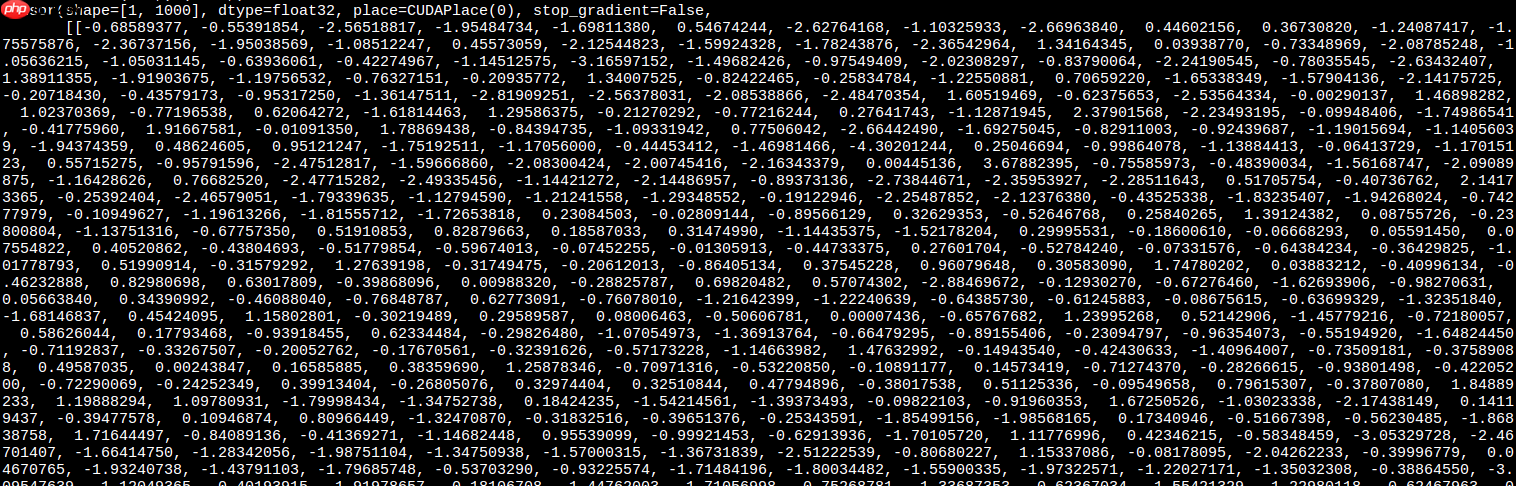
因为是简单的图像分类模型,这里只做一个相同输入下的输出结果验证
 rmTopCMS专属产品展示模板1.10
rmTopCMS专属 -- 产品展示模板 -- 简约官网 -- 企业品牌形象设计rmTopCMS简约大气企业模板;专注企业建站用户需求,提供海量各行业模板,降低中小企业网站建设、网络营销成本,致力于打造用户舒适的建站体验。能够以最低的成本、最少的人力投入在最短的时间内架设一个功能齐全、性能优异、易于维护的网站平台。
 0
查看详情
0
查看详情

torch的最终输出:

paddle的最终输出:
由于训练集特别大, AIStduio暂时还受不了, 这里只用验证集数据训练了两轮
In [3]# 在AIStuido里测试时加载的数据集import cv2from PIL import Image
transforms = T.Compose([
T.Resize(256, interpolation='bicubic'),
T.CenterCrop(224),
T.ToTensor(),
T.Normalize(mean=[0.485, 0.456, 0.406], std=[0.229, 0.224, 0.225])
])# 构建数据集class ILSVRC2012(paddle.io.Dataset):
def __init__(self, root, label_list, transform, backend='pil'):
self.transform = transform
self.root = root
 self.label_list = label_list
self.backend = backend
self.load_datas() def load_datas(self):
self.imgs = []
self.labels = [] with open(self.label_list, 'r') as f: for line in f:
img, label = line[:-1].split(' ')
self.imgs.append(os.path.join(self.root, img))
self.labels.append(int(label)) def __getitem__(self, idx):
label = self.labels[idx]
image = self.imgs[idx] if self.backend=='cv2':
image = cv2.imread(image) else:
image = Image.open(image).convert('RGB')
image = self.transform(image) return image.astype('float32'), np.array(label).astype('int64') def __len__(self):
return len(self.imgs)
val_dataset = ILSVRC2012('data/ILSVRC2012', transform=transforms, label_list='data/data68594/val_list.txt')
self.label_list = label_list
self.backend = backend
self.load_datas() def load_datas(self):
self.imgs = []
self.labels = [] with open(self.label_list, 'r') as f: for line in f:
img, label = line[:-1].split(' ')
self.imgs.append(os.path.join(self.root, img))
self.labels.append(int(label)) def __getitem__(self, idx):
label = self.labels[idx]
image = self.imgs[idx] if self.backend=='cv2':
image = cv2.imread(image) else:
image = Image.open(image).convert('RGB')
image = self.transform(image) return image.astype('float32'), np.array(label).astype('int64') def __len__(self):
return len(self.imgs)
val_dataset = ILSVRC2012('data/ILSVRC2012', transform=transforms, label_list='data/data68594/val_list.txt')
In [4]
#保存训练结果callback = paddle.callbacks.ModelCheckpoint(s*e_dir='./checkpoints', s*e_freq=1)#加载模型及预训练参数model = HarDNet68(cls_num=1000)
run_model = paddle.Model(model)#模型训练optim = paddle.optimizer.SGD(learning_rate=0.0001, weight_decay=6e-5, parameters=run_model.parameters())
run_model.prepare(optimizer= optim,
              loss=paddle.nn.CrossEntropyLoss(),
              metrics=paddle.metric.Accuracy())

run_model.fit(val_dataset,
          val_dataset,
          epochs=2,
          batch_size=256,
          callbacks=callback,
          verbose=1)
The loss value printed in the log is the current step, and the metric is the *erage value of previous step.
Epoch 1/2
/opt/conda/envs/python35-paddle120-env/lib/python3.7/site-packages/paddle/tensor/creation.py:143: DeprecationWarning: `np.object` is a deprecated alias for the builtin `object`. To silence this warning, use `object` by itself. Doing this will not modify any beh*ior and is safe.
Deprecated in NumPy 1.20; for more details and guidance: https://numpy.org/devdocs/release/1.20.0-notes.html#deprecations
  if data.dtype == np.object:
/opt/conda/envs/python35-paddle120-env/lib/python3.7/site-packages/paddle/fluid/dataloader/dataloader_iter.py:89: DeprecationWarning: `np.bool` is a deprecated alias for the builtin `bool`. To silence this warning, use `bool` by itself. Doing this will not modify any beh*ior and is safe. If you specifically wanted the numpy scalar type, use `np.bool_` here.
Deprecated in NumPy 1.20; for more details and guidance: https://numpy.org/devdocs/release/1.20.0-notes.html#deprecations
  if isinstance(slot[0], (np.ndarray, np.bool, numbers.Number)):
/opt/conda/envs/python35-paddle120-env/lib/python3.7/site-packages/paddle/fluid/layers/utils.py:77: DeprecationWarning: Using or importing the ABCs from 'collections' instead of from 'collections.abc' is deprecated, and in 3.8 it will stop working
  return (isinstance(seq, collections.Sequence) and
/opt/conda/envs/python35-paddle120-env/lib/python3.7/site-packages/paddle/nn/layer/norm.py:648: UserWarning: When training, we now always track global mean and variance.
  "When training, we now always track global mean and variance.")
step 196/196 [==============================] - loss: 6.9567 - acc: 0.0010 - 3s/step
s*e checkpoint at /home/aistudio/checkpoints/0
Eval begin...
The loss value printed in the log is the current batch, and the metric is the *erage value of previous step.
step 196/196 [==============================] - loss: 7.0047 - acc: 8.6000e-04 - 2s/step
Eval samples: 50000
Epoch 2/2
step 196/196 [==============================] - loss: 7.0444 - acc: 0.0011 - 3s/step
s*e checkpoint at /home/aistudio/checkpoints/1
Eval begin...
The loss value printed in the log is the current batch, and the metric is the *erage value of previous step.
step 196/196 [==============================] - loss: 7.0022 - acc: 0.0010 - 2s/step
Eval samples: 50000
s*e checkpoint at /home/aistudio/checkpoints/final
验证的最终效果能接近论文的精度
In [5]model = HarDNet68(cls_num=1000)
model_state_dict = paddle.load("/home/aistudio/work/hardnet_best.pdparams")
model.set_state_dict(model_state_dict)
run_model = paddle.Model(model)#模型训练optim = paddle.optimizer.SGD(learning_rate=0.0001, weight_decay=6e-5, parameters=run_model.parameters())
run_model.prepare(optimizer= optim,
loss=paddle.nn.CrossEntropyLoss(),
metrics=paddle.metric.Accuracy())
run_model.evaluate(val_dataset, batch_size=256, verbose=1)
Eval begin...
The loss value printed in the log is the current batch, and the metric is the *erage value of previous step.
step 196/196 [==============================] - loss: 0.9377 - acc: 0.7605 - 2s/step
Eval samples: 50000
{'loss': [0.9376896], 'acc': 0.7605}
以上就是HarDNet:一个低内存占用率网络的详细内容,更多请关注其它相关文章!
# git
# 网站优化影响大吗贴吧
# 梓潼网站推广
# 玄武区个人网站优化
# 汕头网站建设培训中心
# 茂名百度网站优化
# 主要是
# 墨尔本
# 显存
# 官网
# 加载
# 一言
# 占用率
# 产品展示
# 中文网
# 中小企业网站建设
# type
# latte
# udio
# 内存占用
# ai
# python
# 荥阳德育网站建设项目
# 广州市营销推广账户托管
# 第四季度营销推广方案
# 石家庄市大马村网站建设
# 找网络推广营销话术
相关栏目:
【
行业新闻62819 】
【
科技资讯67470 】
相关推荐:
【机智云物联网低功耗转接板】远程环境数据采集探索
Midjourney创始人:AI应该成为人类思想的延伸
眼球反射解锁3D世界,黑镜成真!马里兰华人新作炸翻科幻迷
AYANEO 安卓掌机 Pocket AIR 配置公布:天玑 1200 + 5.5 英寸屏
优地网络助力新媒体拥抱人工智能时代
GPT-4是如何工作的?哈佛教授亲自讲授
Goodnotes 6推出,带来多项全新AI功能,让电子笔记更智能
硅谷人工智能研究院创始人皮埃罗·斯加鲁菲:Transformer模型演讲
中国最强AI研究院的大模型为何迟到了
Adobe旗下Illustrator引入生成式AI工具Firefly
无人机在电力巡检中的应用:全面解析高效巡检流程
AI大举入侵内容行业,哪些上市*及动漫公司进行了布局?
谷歌计划在上海举办开发者大会,重点关注机器学习和生成式AI领域
RoboNeo安装教程
《上古卷轴5》AI高清材质包优化游戏中所有怪物
美图设计室2.0新增哪些功能
浪潮KaiwuDB:“快人一步” - 打造更懂物联网的数据库
“长沙造”无人机,领先的不止植保
速途网络成立“人工智能专家委员会”5位中美博士加盟
成功孵化首个大型模型解决方案的重庆人工智能创新中心
看懂AI,找到增长新势能 | 笔记侠AI峰会等你来
江永:精准施训提升通信无人机应急救援能力
阿里大文娱CTO郑勇:生成式AI将引发内容行业巨变,*制作机会挑战并存
国产医疗企业的人工智能
学生作文评分的新趋势:教师与AI的合作模式
一文看懂被英伟达看中的九号机器人移动底盘
人工智能写作检测工具不靠谱,美国宪法竟被认为是机器人写的
搭载星火认知大模型 讯飞听见智慧屏开启AI办公新体验
万兴播爆桌面端上线,支持AI数字人搜索、视频编辑等功能
联想举办2025创新开放日,展出260余项算力及AI产品技术
传字节内测对话式 AI 产品,代号「Grace」;马斯克嘲讽苹果 头显;比亚迪 F 品牌定名「方程豹」
美图秀秀发布7款AI产品:支持用户创作、商业创作
音乐制作元工具AudioCraft发布开源AI工具
央广车联网亮相2025世界人工智能大会
外科医生的智能助手,“机器人手术”得到补充商业医保覆盖
苹果公司迅速拓展AR/VR团队,Vision Pro发布后7月份增设近100份工作机会
AI 模型 Stable Diffusion 升级:正常生成五指、图像更逼真
金山办公:AI是重要的产品战略之一
李开复官宣新公司「零一万物」,进军 AI 2.0
OPPO三方联合发布AI可持续发展白皮书,坚持发展健康AI生态
360发布AI数字人广场,可同孙悟空、爱因斯坦等古今中外角色对话
《爱康未来之夜嘉宾官宣,携手共赴AI未来》
闪电快讯|京东推出言犀AI大模型 面向零售、医疗、物流等产业场景
「模仿学习」只会套话?解释微调+130亿参数Orca:推理能力打平ChatGPT
如布科技发布新产品AI口袋学习机S12
遵义市首次引入手术机器人,成功实施全膝关节置换术
首届亚太网络法实务大会召开 九位大咖探讨元宇宙与人工智能发展
LinkedIn 推出生成式 AI 辅助撰写帖文功能,将向所有用户开放
“图壤·阅读元宇宙”亮相北京国际图书博览会
Transformer六周年:当年连NeurIPS Oral都没拿到,8位作者已创办数家AI独角兽
 当前位置:
当前位置:  self.label_list = label_list
self.backend = backend
self.load_datas() def load_datas(self):
self.imgs = []
self.labels = [] with open(self.label_list, 'r') as f: for line in f:
img, label = line[:-1].split(' ')
self.imgs.append(os.path.join(self.root, img))
self.labels.append(int(label)) def __getitem__(self, idx):
label = self.labels[idx]
image = self.imgs[idx] if self.backend=='cv2':
image = cv2.imread(image) else:
image = Image.open(image).convert('RGB')
image = self.transform(image) return image.astype('float32'), np.array(label).astype('int64') def __len__(self):
return len(self.imgs)
val_dataset = ILSVRC2012('data/ILSVRC2012', transform=transforms, label_list='data/data68594/val_list.txt')
self.label_list = label_list
self.backend = backend
self.load_datas() def load_datas(self):
self.imgs = []
self.labels = [] with open(self.label_list, 'r') as f: for line in f:
img, label = line[:-1].split(' ')
self.imgs.append(os.path.join(self.root, img))
self.labels.append(int(label)) def __getitem__(self, idx):
label = self.labels[idx]
image = self.imgs[idx] if self.backend=='cv2':
image = cv2.imread(image) else:
image = Image.open(image).convert('RGB')
image = self.transform(image) return image.astype('float32'), np.array(label).astype('int64') def __len__(self):
return len(self.imgs)
val_dataset = ILSVRC2012('data/ILSVRC2012', transform=transforms, label_list='data/data68594/val_list.txt') 上一篇:
上一篇: 返回列表
返回列表